
Why merchants need crypto POS in 2026
The landscape for crypto POS 2026 solutions is defined by a critical pivot: the move from speculative asset acceptance to operational utility. For merchants, the primary driver is no longer just the novelty of digital assets, but the structural advantages of instant fiat settlement. By converting crypto to local currency at the point of sale, businesses eliminate the volatility risk that previously made digital payments a liability on the balance sheet.
Traditional payment processors charge interchange fees that typically range from 1.5% to 3.5% per transaction. Crypto payment gateways, such as BitPay, offer lower-cost alternatives by bypassing traditional card networks. This reduction in processing fees directly improves net margins, particularly for high-volume or low-margin retail environments. The cost efficiency is not merely a perk; it is a competitive necessity in a tight economic climate.
Cross-border efficiency further distinguishes these systems. International transactions via traditional banking rails often involve slow settlement times and high foreign exchange spreads. Crypto POS systems facilitate near-instant cross-border payments, reducing the capital tied up in transit. When paired with stablecoins like USDC, which are pegged to fiat currencies, merchants can enjoy the speed of blockchain without exposure to the price swings of assets like Bitcoin.
However, the high-stakes nature of financial compliance requires caution. Merchants must ensure their providers adhere to strict regulatory standards to mitigate fraud and money laundering risks. The integration of crypto POS 2026 technology is not just a technical upgrade; it is a strategic financial decision that balances cost reduction with rigorous security protocols.
Top crypto POS 2026 providers compared
Selecting the right crypto POS 2026 infrastructure requires balancing transaction costs, asset diversity, and settlement speed. For merchants, the choice is not just about accepting payments; it is about managing counterparty risk and ensuring liquidity. The three dominant gateways—BitPay, NOWPayments, and CoinGate—offer distinct architectures that cater to different operational needs.
BitPay operates as a regulated financial institution, prioritizing compliance and fiat settlement. Its model appeals to merchants who wish to avoid crypto volatility entirely. NOWPayments offers a more decentralized approach, supporting a vast array of altcoins and allowing merchants to hold assets or convert them instantly. CoinGate sits in the middle, offering a broad selection of cryptocurrencies with a focus on ease of integration and global accessibility.
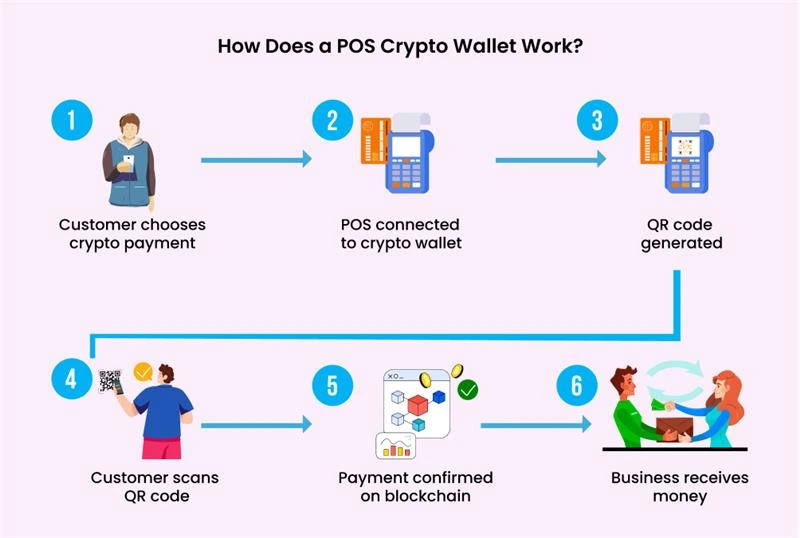
The following table breaks down the core operational metrics for each provider. These figures are based on current public documentation and may vary by region or transaction volume.
| Provider | Transaction Fees | Supported Assets | Settlement Speed |
|---|---|---|---|
| BitPay | 1% | BTC, ETH, USDC, USDT, BNB | Instant Fiat |
| NOWPayments | 0.5% - 1% | 150+ (incl. altcoins) | Instant (Crypto or Fiat) |
| CoinGate | 0.9% | 70+ (incl. stablecoins) | Instant Fiat |
Fee structures are the primary differentiator. BitPay’s flat 1% fee is higher than some competitors but includes insurance and compliance overhead. NOWPayments offers lower fees for high-volume merchants but charges more for niche altcoin conversions. CoinGate’s 0.9% fee is competitive for mid-sized retailers.
Asset support varies significantly. BitPay focuses on major assets to ensure regulatory clarity. NOWPayments supports over 150 cryptocurrencies, appealing to crypto-native businesses. CoinGate offers 70+ assets, balancing variety with liquidity.
Settlement speed is critical for cash flow. All three providers offer instant settlement options. BitPay settles directly to fiat bank accounts. NOWPayments allows instant conversion to fiat or stablecoins. CoinGate settles to fiat accounts with minimal delay.
Hardware terminals vs software integrations
Choosing between physical hardware and software integrations for your crypto POS 2026 infrastructure depends entirely on your sales channel. The decision dictates how you handle transaction finality, customer interaction, and technical maintenance. Physical terminals are designed for in-person commerce, while software plugins serve digital storefronts. Both paths require rigorous security protocols to protect against fraud and ensure compliance.
Physical POS Terminals
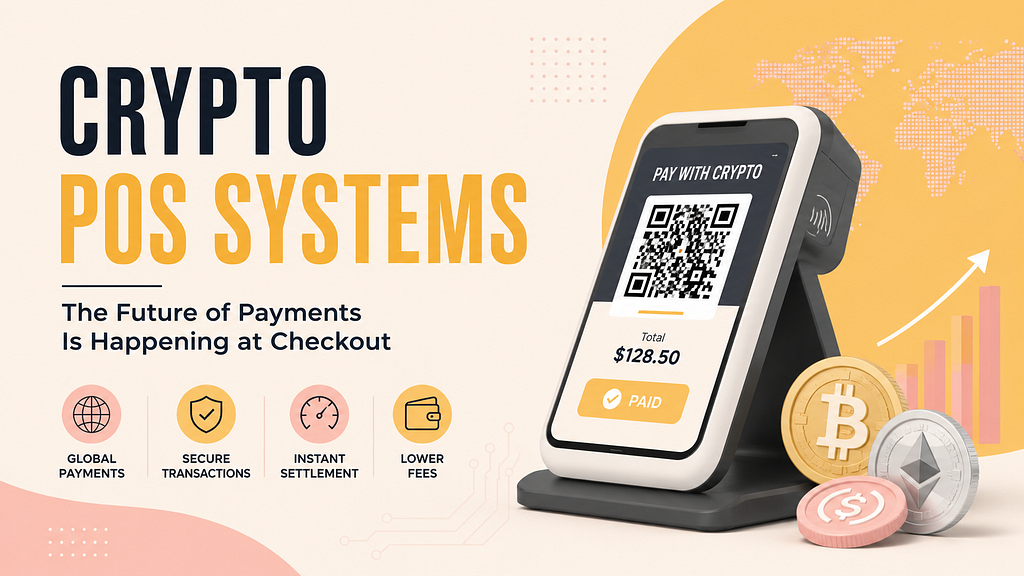
Hardware terminals are dedicated devices, often resembling traditional card readers, equipped with NFC and QR code scanners. They allow merchants to accept cryptocurrency directly at the point of sale. The primary advantage is immediacy: the transaction is processed and settled on-device, often converting crypto to fiat instantly to mitigate volatility risk. These devices are robust, requiring minimal technical setup beyond initial configuration. However, they represent a tangible capital expense and require physical maintenance. Merchants must ensure the hardware is secure against tampering and keeps firmware updated to meet evolving security standards.
Software Integrations
Software integrations, such as payment gateways or plugins, embed crypto acceptance directly into an e-commerce website or mobile app. This approach offers greater flexibility, allowing merchants to accept payments from anywhere without dedicated hardware. It integrates seamlessly with existing inventory and accounting software. The trade-off is reliance on internet connectivity and third-party API stability. Security here shifts from physical device protection to software integrity, requiring strong encryption and regular code audits. For online businesses, this is the standard, scalable solution.
Compliance and tax reporting basics
Operating a crypto POS 2026 system requires strict adherence to financial regulations. Merchants must ensure their payment providers handle Know Your Customer (KYC) and Anti-Money Laundering (AML) checks. This infrastructure protects your business from regulatory penalties and ensures that every transaction is traceable. Without proper compliance layers, you risk having your payment channels frozen by financial institutions.
Tax reporting for crypto transactions remains complex. Each conversion from digital asset to fiat currency is a taxable event in many jurisdictions. Your POS terminal should generate detailed transaction records, including timestamps, values, and wallet addresses. These records are essential for accurate accounting and filing with tax authorities. Relying on manual tracking often leads to errors that can trigger audits.
Use providers that integrate directly with accounting software to automate record-keeping. This reduces the administrative burden and ensures data integrity. Always consult a tax professional regarding crypto transactions in your jurisdiction to ensure full compliance with local laws.
Setting up your first crypto payment flow
Integrating a crypto POS 2026 solution requires moving beyond simple wallet addresses to a structured compliance and settlement workflow. The architecture must bridge on-chain volatility with off-chain fiat stability, ensuring that merchant revenue is not eroded by market fluctuations during the transaction window. This section outlines the operational sequence for deploying a secure, compliant payment gateway.
Begin by vetting providers against current regulatory frameworks. In 2026, compliance with anti-money laundering (AML) and know-your-customer (KYC) standards is non-negotiable for fiat settlement. Choose a processor that offers direct bank integration and holds necessary money transmitter licenses in your jurisdiction. Avoid unregulated aggregators that lack transparent audit trails.

Define your risk tolerance by selecting settlement currency and timing. Most modern crypto POS 2026 systems allow you to auto-convert incoming crypto to stablecoins or fiat immediately upon confirmation. Set minimum transaction thresholds to filter out dust attacks and configure withdrawal schedules to align with your banking liquidity requirements.
Connect the provider’s API to your point-of-sale hardware or e-commerce platform. Ensure the checkout interface clearly displays the crypto amount, the fiat equivalent, and the QR code or wallet address. Test the latency of blockchain confirmations; for high-volume retail, prioritize networks with fast finality to reduce checkout friction.
Before going live, run simulation transactions using testnets or small real-value amounts. Verify that the fiat settlement appears in your bank account within the promised timeframe. Check that receipt generation, tax reporting data, and customer notifications trigger correctly. Document any discrepancies in the provider’s documentation or support channels.
No comments yet. Be the first to share your thoughts!