

Brick-and-mortar stores face a persistent hurdle with Lightning Network payments: spotty internet. Yet, as Bitcoin holds steady at $76,045.00 amid a 24-hour dip of $2,147.00, merchants cannot afford to pause sales during outages. CryptoPOS HQ terminals tackle this head-on, enabling secure offline transactions via USDC and Lightning, complete with NFC taps and QR scans that function independently of the web. This precision-engineered approach minimizes risk, ensuring payments settle reliably once connectivity returns.
The allure of Lightning lies in its speed and low fees, ideal for quick retail exchanges. But traditional setups falter offline, leaving stores vulnerable to lost revenue. Solutions like LNPoS demonstrate viability, supporting offline Lightning via LNURLPoS on low-cost, self-built devices around 50 euros. CryptoPOS HQ builds on such foundations, prioritizing offline Lightning POS security without intermediaries, safeguarding merchants from double-spends or data breaches.
Navigating Connectivity Gaps in Physical Retail
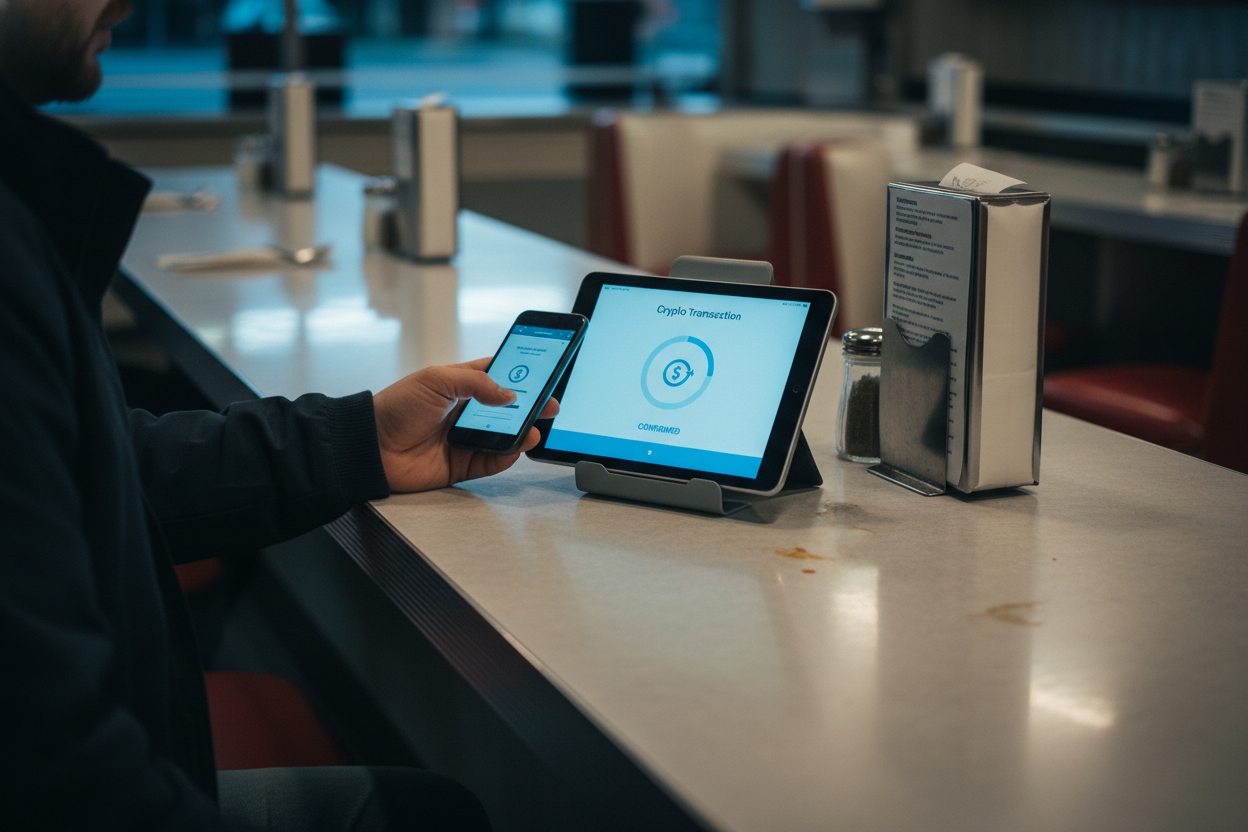
Consider a busy café during peak hours; Wi-Fi drops, and suddenly Lightning payments halt. Conventional POS systems from players like Square or Star Micronics handle offline credit cards through encryption and delayed settlement, maintaining PCI compliance. CryptoPOS HQ adapts this resilience for crypto, storing encrypted Lightning invoices locally. Transactions queue securely, forwarding via end-to-end encryption (E2EE) upon reconnection, much like Aireus POS or DibTech protocols. This lightning network offline POS capability prevents sales dips, critical when Bitcoin volatility demands uninterrupted operations.
Offline mode isn't a luxury; it's risk management in action. Without it, merchants trade opportunity for uncertainty.
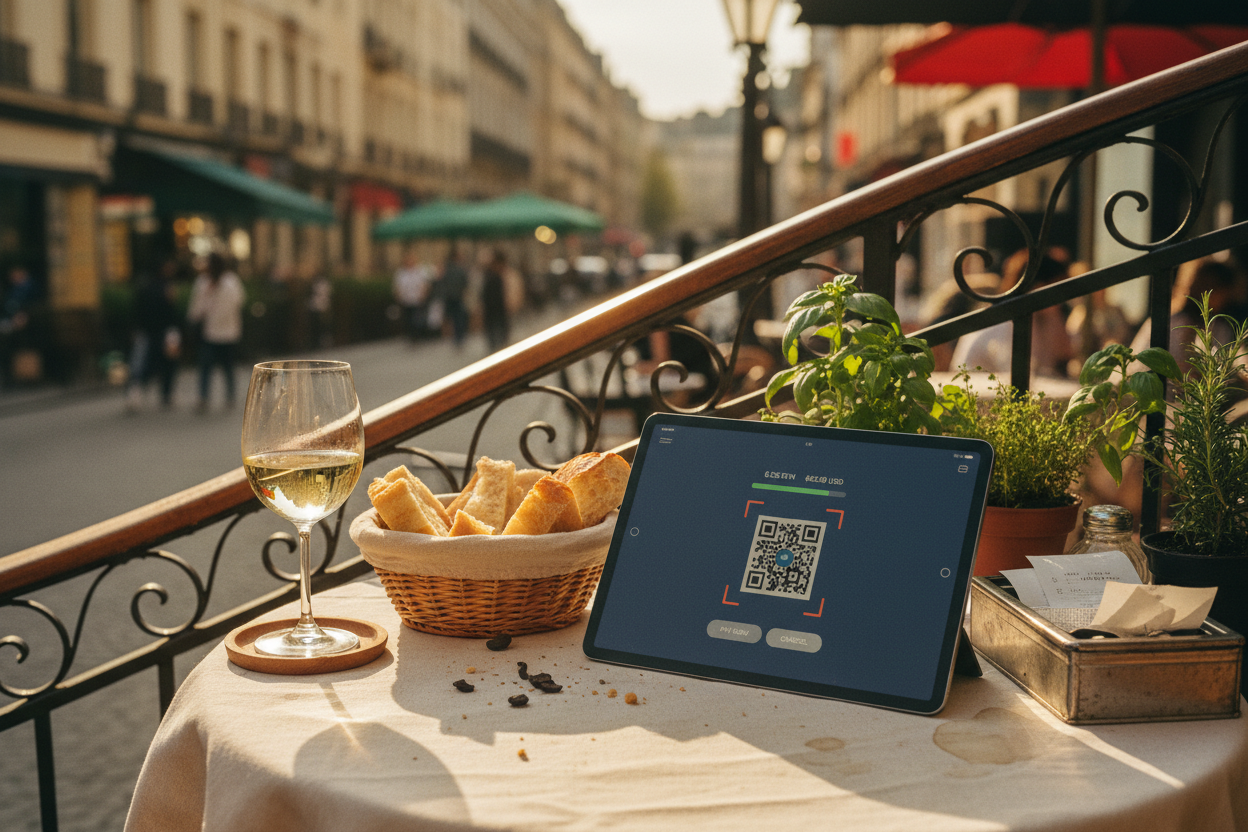
Lightning's channel-based structure inherently resists full offline use, yet innovations bridge the gap. Teechain's off-chain channels via trusted execution environments offer a blueprint, allowing asynchronous payments. CryptoPOS HQ integrates similar mechanics, focusing on USDC for stable value alongside Lightning's efficiency. Merchants scan QR or tap NFC; the terminal validates signatures offline, batching proofs for later broadcast. No blind trust required, just cryptographic certainty.
Encryption as the Backbone of Offline POS Security
Secure cryptopos terminals demand robust encryption from the outset. CryptoPOS HQ employs E2EE across all offline flows, protecting invoice data and signatures akin to Federal Reserve insights on POS resiliency. Unlike Flash devices needing constant Wi-Fi, our terminals operate standalone, echoing opago's instant confirmations but extending to zero-connectivity scenarios. Local storage uses hardware-secured modules, thwarting tampering even in theft scenarios.
PCI-compliant offline card systems from ATS or Store Bounty prove the model: encrypt locally, settle later. For POS security crypto stores, we layer Lightning-specific defenses, like pre-signed multi-signature schemes. A customer pays $10 in sats equivalent; the terminal issues a provisional receipt, hashes the commitment, and syncs on-chain post-outage. Risks plummet, as double-spend attempts fail without channel liquidity proofs.
Bitcoin (BTC) Price Prediction 2027-2032
Forecasts influenced by Lightning Network offline POS innovations and retail adoption trends from current $76,045 level in 2026
| Year | Minimum Price | Average Price | Maximum Price | YoY % Change (Avg) |
|---|---|---|---|---|
| 2027 | $70,000 | $100,000 | $150,000 | +32% |
| 2028 | $100,000 | $150,000 | $250,000 | +50% |
| 2029 | $150,000 | $230,000 | $400,000 | +53% |
| 2030 | $200,000 | $320,000 | $500,000 | +39% |
| 2031 | $280,000 | $430,000 | $650,000 | +34% |
| 2032 | $380,000 | $560,000 | $800,000 | +30% |
Price Prediction Summary
Advancements in secure offline Lightning POS systems like LNPoS are set to boost Bitcoin's real-world retail adoption, supporting a bullish long-term trajectory. Average prices are projected to grow progressively from $100K in 2027 to $560K by 2032, with min/max reflecting bearish regulatory risks and bullish adoption surges amid halving cycles.
Key Factors Affecting Bitcoin Price
- Lightning Network offline transaction capabilities (e.g., LNPoS, LNURLPoS)
- Increased brick-and-mortar store adoption via POS terminals
- Bitcoin halvings in 2028 and 2032 driving supply scarcity
- Regulatory developments favoring crypto payments
- Macro trends, institutional inflows, and market cycles
- Technological enhancements reducing fees and improving speed
Disclaimer: Cryptocurrency price predictions are speculative and based on current market analysis. Actual prices may vary significantly due to market volatility, regulatory changes, and other factors. Always do your own research before making investment decisions.
Practical Edge for Restaurants and Retail Outlets
Imagine a restaurant mid-rush, internet down from storm interference. Legacy POS like Payflex or HCCTG smart checkouts buffer inventory and sales; CryptoPOS HQ adds crypto fluency. Offline Lightning accepts USDC taps instantly, logging via QR for loyalty scans too. Vending machines or markets gain similar fortitude, processing without pause. Fees stay minimal, under a sat per transaction online, zero extra offline.
Star Micronics emphasizes secure credit offline; we extend to crypto, where Bitcoin's $76,045.00 price underscores adoption urgency. Merchants avoid shrinkage from forced cash-only shifts, aligning with Store Bounty's AI theft prevention but centered on payment flows. Offline support isn't patchwork; it's engineered reliability, letting stores thrive amid volatility.
This setup demands cautious implementation: audit firmware regularly, limit offline batch sizes to channel capacities. Yet, the payoff is tangible; no more watching customers walk away over connectivity woes.
- Encrypt every tap and scan locally.
- Validate signatures without network calls.
- Batch and settle with zero disputes.


No comments yet. Be the first to share your thoughts!